
Chop1Chinese Name Seals

A 2,000-year-old Chinese art, made yours

Your name, carved in a Chinese seal

In China, a seal is a signature — pressing it means “this is me, and I keep my word.” Get a Chinese name from your own, carve it into a seal and hide a QR code in it: scan it, and a scroll unrolls with your wish.

of seal history
~4,000yrs
UNESCO Intangible Heritage
2009
Song, brush and seal script
3scripts
every seal and scroll is unique
1of 1
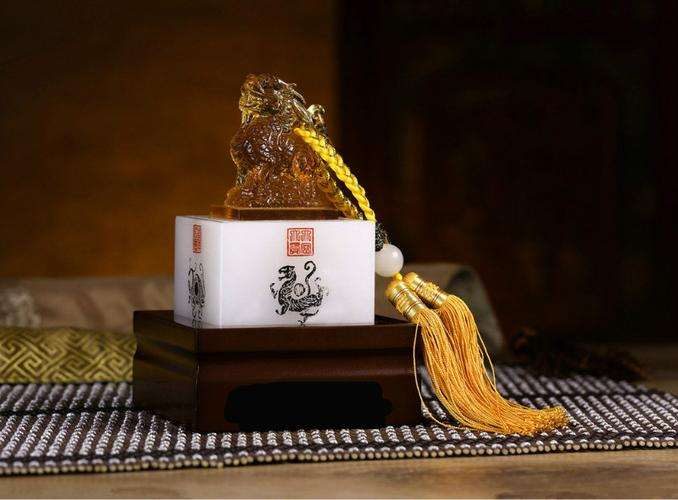
A craftsman hand-carving a seal
Scroll

Seal Studio

Put a seal on your dream

Carve your name or a wish into a seal: pick a style and a script to get a seal with real stone texture. Turn on the hidden QR code and write down your wish — a scan unrolls a scroll inscribed with it, and your seal enters our online register.

Get your Chinese name
    Try
    Style
    Typeface
    Shape
    Make it a real seal — $299Carved in stone by a seal carver in China, with its scroll and certificate. Reserve now, pay later.

    传承创新

    This seal can also hide a QR code — scan it with your phone camera to unroll its very own scroll.

    Chinese names

    How we choose your Chinese name

    Chinese has no alphabet, so a name can’t be spelled out letter by letter. It is rebuilt either by sound — each syllable becomes a character that sounds alike — or by meaning. The studio gives you both, and checks every character.

    1. Sounds like your name

      Two suggestions follow the way Chinese media write foreign names, using the standard transliterations of the Xinhua News Agency: Michael becomes 迈克尔 (mài kè ěr) and Jordan 乔丹 (qiáo dān). These characters are chosen for their sound, not their meaning.

    2. Chosen for meaning

      Four suggestions are names in the Chinese style: two or three characters whose sound echoes yours and whose meaning is positive. They often start with a real Chinese surname close to your family name, because Chinese names put the family name first.

    3. Checked character by character

      An AI model proposes the names, but every reading and meaning you see comes from the Unicode Han Database (Unihan), not from the AI. We only use the 6,763 common characters of the GB 2312 standard and filter out characters with unlucky meanings.

    Planning something permanent, like a tattoo? Ask a native Chinese speaker to look at your name first.

    Questions about Chinese name seals

    What is a Chinese name seal, or “chop”?

    A Chinese seal — 印章 (yìnzhāng), often called a “chop” in English — is a carved stamp printed in red cinnabar paste. In China it works like a signature: for thousands of years officials, artists and ordinary people have stamped one on documents, paintings and letters to say “this is mine”.

    How do I get my name in Chinese?

    Type your name in Latin letters into the studio above and choose “Find my Chinese name”. You get six suggestions — two standard transliterations and four meaning-based names — each with the pinyin and the meaning of every character. Choose “Carve this name” to put it on a seal.

    Is it free?

    Yes. Getting a Chinese name, carving a digital seal, downloading it as a PNG and hiding a QR code in it are all free. Only a real stone seal costs money (US$299).

    What is the difference between baiwen and zhuwen seals?

    Baiwen (白文, “white characters”) seals have the characters cut into the stone, so they print white on a red square. Zhuwen (朱文, “red characters”) seals leave the characters raised, so they print red on the paper. Both are traditional.

    Which script should I choose?

    Song is a clear printed style that is easy to read. Brush script looks hand-written. Seal script (篆书 zhuànshū) is the ancient style traditionally carved on seals; it uses traditional character forms, so a simplified name can look quite different.

    How does the hidden QR code work?

    When you switch it on, dots in the seal’s stone texture are arranged so that phone cameras read the seal as a QR code. Scanning it opens the seal’s own ink-landscape scroll with your wish. It scans best from a screen or a printed image; a seal stamped by hand on paper is much harder to scan.

    How is a Chinese seal different from a Japanese hanko?

    Japanese hanko (also called inkan) come from the Chinese seal tradition. In Japan they are still used every day for banking and contracts, and a person’s official seal is registered with the local government. In China, companies still use official seals, but personal name seals today are mostly used by artists and as keepsakes.

    Is a seal made here a legal signature?

    No. Seals made here, on screen or in stone, are keepsakes and a way to express yourself — not legal signatures, company seals or proof of identity.

    Can I get a real stone seal?

    Yes. A seal carver can carve your design in Shoushan or Qingtian stone for US$299, including express shipping, with a hand-carved side inscription, seal paste and a gift box. Reservations are open now; ordering opens in mid-November.

    Do you keep the name I type?

    The name is sent to an AI model to make suggestions, and the suggestions for each name are cached for 30 days without being linked to you. If you register a seal, we keep its wish and original name so its scroll page can show them. See our Privacy Policy for details.

    History

    The Origins of Chinese Seals

    From marks on pottery to tokens of trust in trade, and on to the scholar's art of seal carving, the seal has accompanied Chinese civilization for nearly four thousand years.

    1. 源

      01

      Origins & Early Development

      Chinese seals have a history of nearly four thousand years. Early seals were used mainly in pottery making; as commerce grew, they became tokens of trust in the exchange of goods. By the Spring and Autumn and Warring States periods, seals inscribed with official titles or personal names were in common use.

    2. 汉

      02

      Qin & Han Dynasties

      The Qin and Han were a pivotal stage. The Qin dynasty set strict rules for the names, forms, scripts and use of seals, and the Han inherited and continued these institutions. Official and private seals were widespread in the Han; their seal script was square and robust, their layouts rigorous and their styles varied — an unprecedented golden age in the history of seals.

    3. 隋

      03

      Northern & Southern Dynasties to Sui & Tang

      During the Northern and Southern Dynasties, as papermaking flourished, government documents moved from bamboo slips to paper and silk, and seals shifted from impressing clay to stamping with ink paste. After the Sui unified China, the new style of official seals was fixed as an institution, and official seals began to use red-character (zhuwen) carving.

    4. 宋

      04

      After the Tang & Song

      After the Tang and Song, official seals grew uniform and rigid, while scholar-officials began to take an interest in seal making themselves, elevating it into the art of seal carving. The Yuan dynasty pioneered carving seals in soft agalmatolite stone, opening the way for personal artistic expression. In the Ming and Qing, schools of seal carving flourished and the art reached its glorious peak.

    A seal creation artwork

    非物质文化遗产

    Intangible Cultural Heritage

    • 2009

      The art of Chinese seal engraving was inscribed on UNESCO's Representative List of the Intangible Cultural Heritage of Humanity.

    • 2014

      Jinshi seal carving was added to China's fourth list of National Intangible Cultural Heritage.

    • 200M+

      As seal creations have grown, stamp-collecting at travel destinations has become a craze loved by visitors — posts on topics like “stamp sharing” on Xiaohongshu (RedNote) have passed 200 million views.

    Art

    The Development of Seal Art

    After the Tang and Song dynasties, seals became an important way for Chinese literati and artists to express their aesthetic ideals — ranked alongside poetry, calligraphy and painting as one of China's four traditional arts.

    Today, Chinese seal art is a traditional handcraft that unites calligraphy, painting and carving, with a unique artistic charm and deep cultural value.

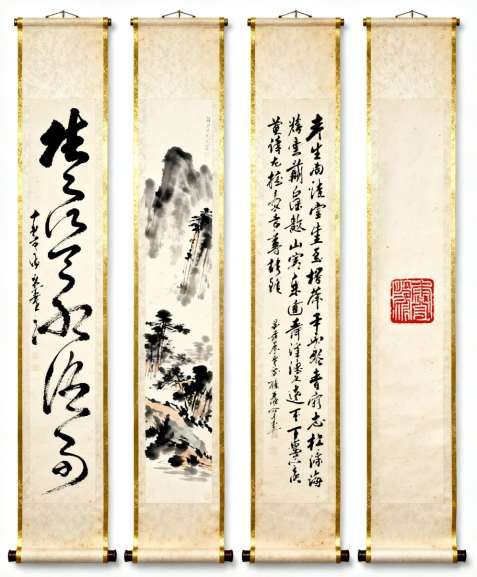
    Hanging scrolls combining poetry, calligraphy, painting and seals
    Poetry · Calligraphy · Painting · Seal — China's four traditional arts
    • A Vessel of Cultural Heritage

      Seal culture holds a wealth of historical, cultural and artistic information. It is an essential part of traditional Chinese culture and carries the spirit of the Chinese nation.

    • Artistic & Aesthetic Value

      A seal is the perfect union of metal and stone, carving and calligraphy. Within a tiny square, the arrangement of characters, the weight of lines and the contrast of red and white create a unique artistic charm of great aesthetic value.

    • A Symbol of Trust

      In traditional Chinese culture, a seal stands for integrity and a promise kept. Whether on official documents, contracts or works of painting and calligraphy, a seal carries important legal and moral meaning.

    Red and White Within a Square Inch

    Seals come in two basic forms. Baiwen (white-character) seals are carved in intaglio: the characters are cut away and print white on red, solemn and weighty. Zhuwen (red-character) seals are carved in relief: the characters stand out and print red on white, clear and lively. Official seals adopted red characters from the Sui dynasty on — and this interplay of red and white lies at the heart of seal aesthetics.

    金石同寿
    Baiwen · Intaglio
    金石同寿
    Zhuwen · Relief

    Innovation

    Three Innovations in Seal Creations

    Building on the traditional art of the seal, we innovate in three dimensions: technology, content and form.

    1. Full-color seal artwork “Holding Up Good Fortune”

      01技术创新

      Technology

      China's first full-color seals: museum treasures and city landmarks rendered in rich color within a single square — one stamp creates a finished picture.

    2. Beijing 3,000-year city history seal set

      02内容创新

      Content

      Thousands of years of city history, national treasures from museum collections and great engineering feats, distilled into seal series with written stories — every seal has a tale to tell.

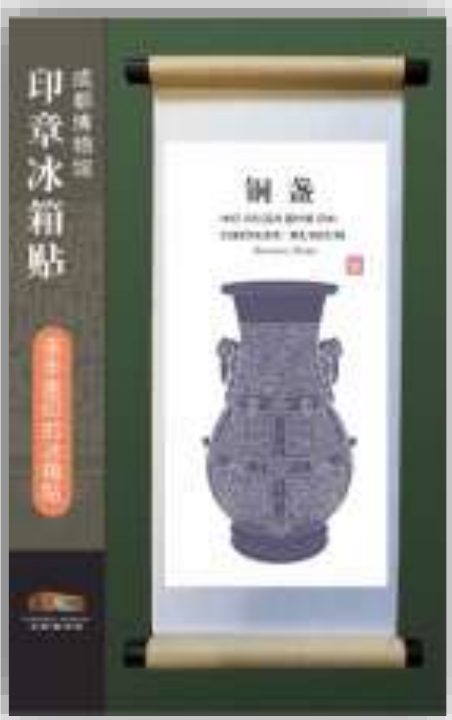
    3. Chengdu Museum seal fridge magnet

      03形式创新

      Form

      Stamped onto scrolls, engraved booklets, fridge magnets, postcards and desk calendars — from stamp-collecting to keepsake gifts, seals become something to use, collect and give.

    Projects

    Seals in Cities, Museums and Enterprises

    From city tourism to museums, from landmark engineering to international events, seal creations are being seen, stamped and treasured by more and more people.

    历史Seal Creations · History

    A Journey Through a City's Time

    We distill thousands of years of a city's history into a dozen or so carefully designed seals in soft Morandi tones, each with a short written story, paired with several custom full-color landmark seals. This blend of past and present gives visitors a whole new cultural-tourism experience and has been a hit with the market. Chengdu, Tianjin, Xuzhou, Beijing… more and more cities are joining this time-travel journey through seals.
    • Chengdu
    • Tianjin
    • Xuzhou
    • Beijing
    文物Seal Creations · Museum Treasures

    Stamping National Treasures into Time

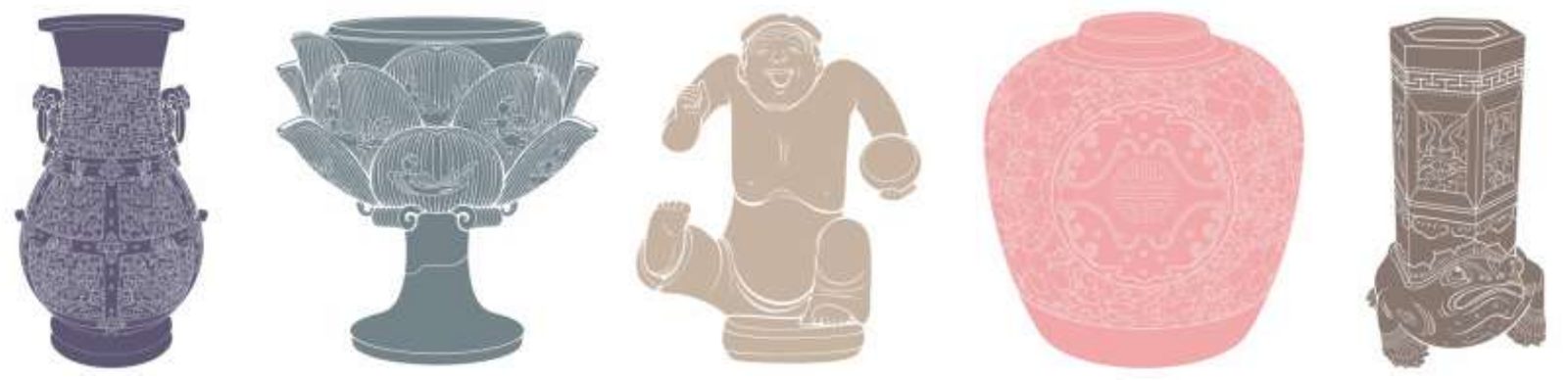
    During China's National Day holiday in 2025, the “Stamping National Treasures into Time” seal collection went on sale at the Chengdu Museum for the first time. China's first full-color seals print 12 classic artifacts from the museum's collection onto scrolls, engraved booklets, fridge magnets, postcards and desk calendars. It quickly became one of the museum's most loved and best-selling products — and the scroll stamped with the full set of color seals sold out in under three days.

    • Chengdu Museum
    • 12 collection artifacts
    • Scrolls sold out in 3 days
    企业Seal Creations · Enterprise

    Pillars of the Nation · Three Gorges Seals

    “Pillars of the Nation: Three Gorges Seals” and the “Three Gorges Dam Panorama Seals” draw on the theme “History — Engineering Epic — Humanity and Nature.” In the art form of woodcut-style print seals, they recreate the majestic landscape of the Three Gorges Dam and the enterprising spirit behind it, creating distinctive cultural gifts for enterprises and local governments.

    • Woodcut-style seals
    • Corporate gifts
    • Government cultural gifts
    文化Seal Creations · Culture

    Gifts for the 2nd Golden Panda Awards

    Our scroll of Chengdu full-color landmark seals was chosen by the organizers of the 2nd Golden Panda Awards (2025) as the official gift for Chinese and international guests. We were commissioned to design two special color seals, “Golden Panda Awards” and “Chengdu Welcomes You,” so guests could experience traditional Chinese seal culture on site — a favorite among film stars and experts from home and abroad.

    • 2025 Golden Panda Awards
    • Gifts for international guests
    • Custom color seals

    Contact

    Thank You — Let's Work Together

    City tourism, museum products, corporate and government gifts, custom seals for major events… Tell us what you need and we'll be in touch soon.

    Full-color seal artworks of museum artifacts
    • City Tourism

      City-history seals, full-color landmark seals, stamp trails

    • Museum Products

      Full-color artifact seals, scrolls, magnets, postcards, calendars

    • Custom Gifts

      Bespoke seals for enterprises, governments and major events

    Please provide at least a phone number or an email so we can reach you.